martes, 7 de abril de 2015

WHAT CAN YOU SEE?

This is our next activity, some of you have already experimented with it, and here are some examples:


Assessment Criteria (do not forget to copy this at the back of your work) 

1.Draw a margin or a frame or a background. (1 point)
2. Use primary colours. (2 points)
3. Originality, creativity. (3 points)
4. Neatness, good presentation. (2 points)
5. Description of your work. (1 point
6. Selfevaluation. (1 point)

lunes, 23 de marzo de 2015

COLOUR CONTRAST

These are excellent examples of Colour Contrast. The high contrast is caused by using complementary colours: 


miércoles, 11 de marzo de 2015

THIRD TASK WITH COLOUR

COLOUR WHEEL

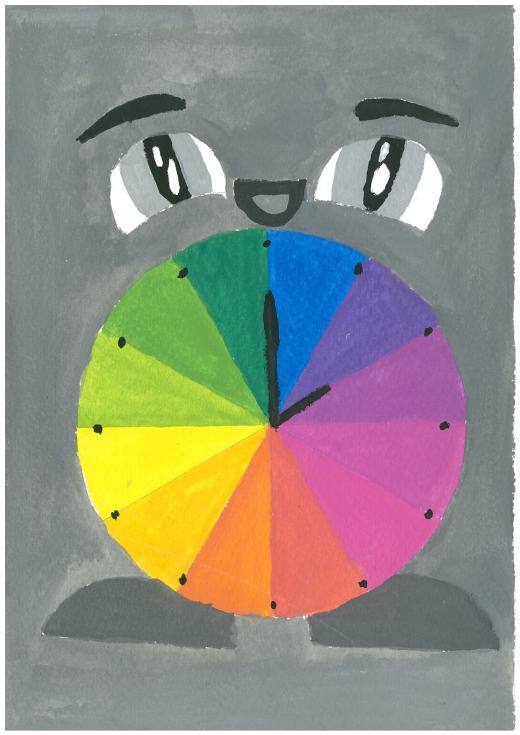
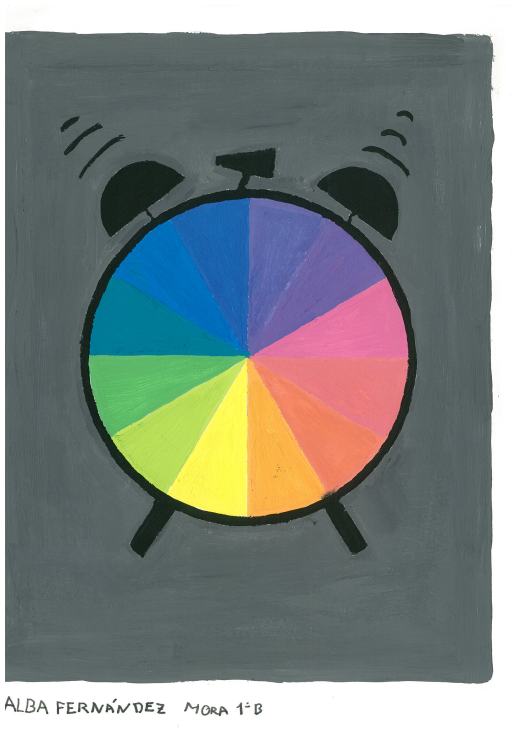
You will have to paint the “Colour Wheel” but as a part of something else: you will have to design a CLOCK!
Any type you want. It might be a watch, an alarm clock, a grandfather clock, etc.

Don´t forget to copy the assessment criteria at the back side of the sheet of paper:

1st.- Name, last name and group.
2nd.- Draw a frame.
3rd.- Get homogeneus colours.
4th.- Accuracy at edges.
5th.- Complexity of the drawing.
6th.- Neatness.
7th.- Self Assessment. (Creative Process)

FOR EXAMPLE: 

jueves, 5 de marzo de 2015

SECOND TASK WITH COLOUR


COLOUR WHEEL WITH CELLOPHANE PAPERS

ASSESSMENT CRITERIA 

(Do not forget to copy this at the back of your activity)

1-      DRAW A MARGIN OR FRAME WITH A FINE FELTPEN (1)

2-      GET THE RIGHT COLOURS (3)

3-      RIGHT DIVISION OF THE CIRCUMFERENCE IN 6 EQUAL PARTS. (1)

4-      COLOURS IN THE RIGHT ORDER OR POSITION (1) 

5 - TRACE THE LINES WITH A PERMANENT MARKER (CIRCUMFERENCE) (1)
 
6-      GOOD PRESENTATION OR NEATNESS (1) 

7-      NAMES OF COLOURS (indicate primary and secondary) (1)

8-      SELFASSESMENT (1)


martes, 3 de marzo de 2015

FIRST TASK WITH COLOUR


COLOUR WHEEL WITH COLOUR PENCILS

Draw a 10 cm radius circumference and divide it in 12 equal parts, then colour the primary, secondary and tertiary colours (in this order) using only the three primary colour pencils. Write the names of the colours and divide it in two parts, indicating warm and cool colour schemes.


ASSESSMENT CRITERIA 

(Do not forget to write this at the back of your activity)


       1-      DRAW A MARGIN OR FRAME WITH A FINE FELTPEN (1 point)

       2-      GET THE RIGHT COLOURS, IN THE RIGHT ORDER AND HOMOGENEOS (4 points)

     3-      RIGHT DIVISION OF THE CIRCUMFERENCE IN 12 EQUAL PARTS. (1 point)

       4-      TRACE THE LINES WITH A FINE FELTPEN (CIRCUMFERENCE AND DIVISIONS) (1 point)

        5-      GOOD PRESENTATION OR NEATNESS (1 point) 

        6-      NAMES OF COLOURS AND DIVISION IN COOL AND WARM (1 point)

        7-      SELFASSESMENT (1 point):

I think I have a…  because…
My mark is a … because…
I have got a… because…
I think I deserve a… because…
With this activity I have learned/learnt 

jueves, 12 de febrero de 2015

THE MAKING OF THE MASKS

Making plaster masks has been an interesting activity, like it also was on previous years, but this time we have done it in groups of 30 students, and just 45 minutes. Hummmmm! A BIG MESSY CHALLANGE.
You have done a great job, well organized and although the class was a bit messy, you all managed to clean and tidy everything just on time. CONGRATULATIONS! once more.

Now it is time to decorate your masks, and next week we will admire in class your creative works of art.

Enjoy Saint Valentine's Day!

jueves, 15 de enero de 2015

SCHOOLTRIP TO THE MNCARS

Congratulations from the tourguides!!!! They were absolutely fascinated with you. Excellent behaviour.You all have shown interested, a great sense of humour and a great attitude in general.

Now lets check you knowledge about our  visit: 

What is the MNCARS?  It is the Museo Nacional Centro de Arte Reina Sofía.

What type of art exhibites the Reina Sofía? S.XX and Contemporary art.

Where is it?  It is located in Madrid, near the Atocha train and metro stations, at the southern end of the so-called Golden Triangle of Art (located along the Paseo del Prado and also comprising the Museo del Prado and the Museo Thyssen-Bornemisza).

Which is the most famous master piece of art in the Museum? Certainly the most famous masterpiece in the museum is Picasso's painting Guernica. Guernica was moved to its current permanent location in a purpose-built gallery at the Reina Sofia Museum in 1992

What was the Museum's building originally?  The central building of the museum was once an 18th-century hospital. An example of Spanish Neoclassical architecture. The actual building was designed by architect José de Hermosilla and his successor Francisco Sabatini. He latter did a majority of the work, although only one-third of the proposed project by Sabatini was completed.

When was it opened as an Art Museum? The building has been functioning as the Centro del Arte (Art Center) since 1986 but was established as the Museo Nacional Centro de Arte Reina Sofía in 1988.


What have we seen? THIS

 Visita comentada

De la mano de artistas como Pablo Picasso, Isidre Nonell o Joan Miró esta visita comentada revela cómo distintas identidades individuales y colectivas confluyen en las primeras décadas del siglo XX. Los alumnos son interpelados acerca de esta circunstancia por medio del análisis de obras en las que aparece el cuerpo y la personalidad como objeto de estudio físico y simbólico.
La mujer del cambio del siglo o la figura del artista de vanguardia que proyecta sus inquietudes personales sobre su obra, son algunas de las identidades que aparecerán reflejadas en las piezas que componen el itinerario. De este modo, los voluntarios culturales del Museo Reina Sofía plantean a los grupos del primer ciclo de Secundaria una exploración tanto formal como conceptual que, a modo de recorrido dialogado, tiene lugar en la salas de la Colección 1.

ACTIVITY AFTER AND DURING THE VISIT

1. Take notes (written and also sketches) from everything you find interesting, so we can comment the visit and your notes in class. 
2. Select one piece of Art (the one you like the most) think about a personal interpretation of this piece of art. It could be a drawing, a painting or an sculpture, or a mix of techniques.
3. Do your own piece of Art based on the one you have choosen. (You can work individually or in groups of maximum 4 people).

Check these interpretations of works of Art done by students from an Elementary School using geometric figures: